
Develop New Beverages
Product strategy, beverage formulation, ingredient qualification, production-like samples, consumer testing, pilot validation, and scale-up planning.
Explore beverage formulation services →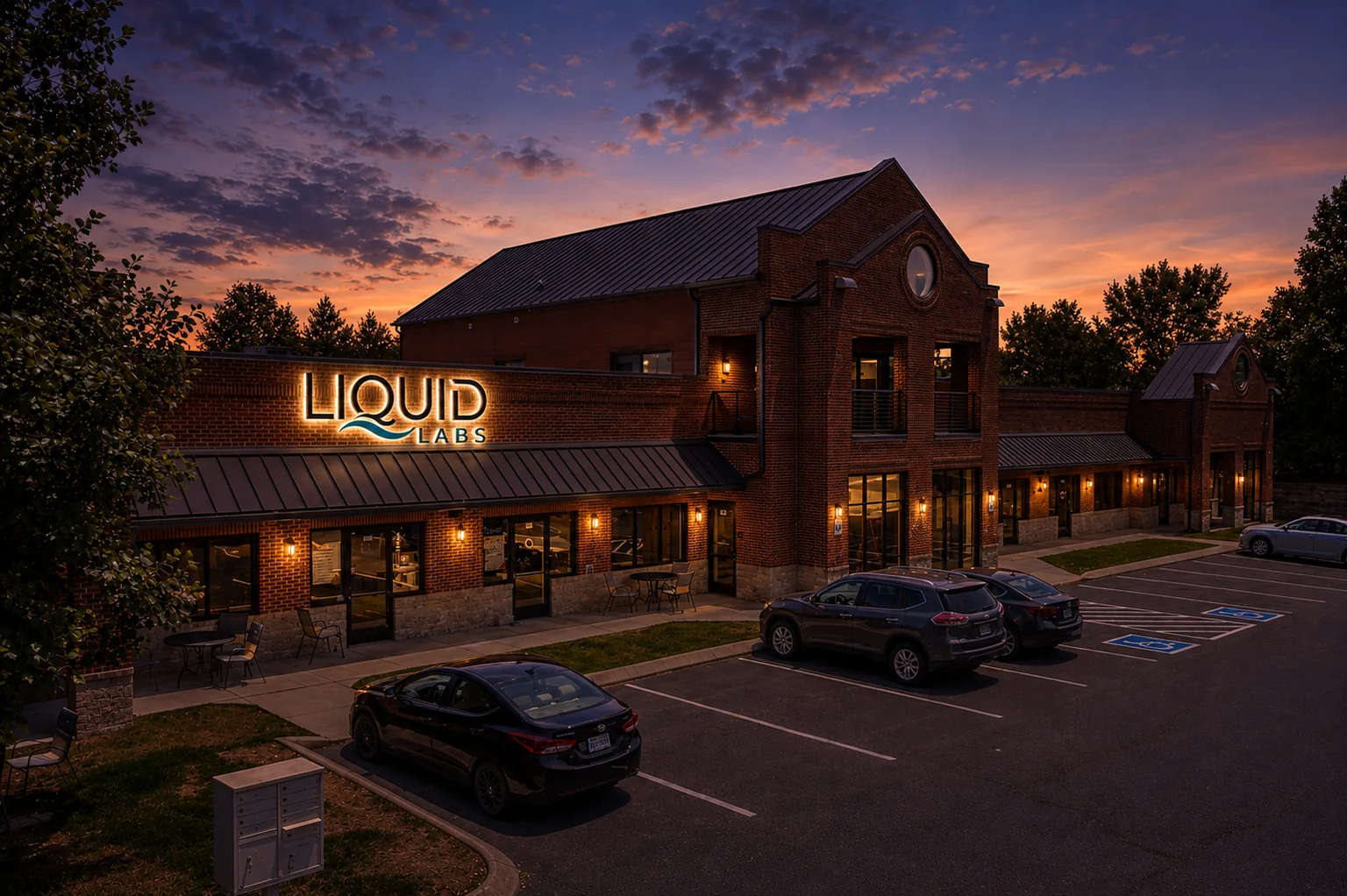
Liquid Labs connects product strategy, formulation, consumer evidence, production-like samples, pilot validation, and fractional operations—so commercial production builds inventory instead of discovering the formula.
More than 7,000 square feet dedicated to recipe formulation and validation runs in Franklin, Tennessee.
Built for technically complex beverage platforms, including functional beverages, energy drinks, botanicals, RTDs, hard seltzers, non-alcoholic products, and cannabinoid beverages where lawful.
Liquid Labs is a beverage development and validation partner in Franklin, Tennessee, serving companies locally, regionally, and nationally.
Product strategy, beverage formulation, ingredient qualification, production-like samples, consumer testing, pilot validation, and scale-up planning.
Explore beverage formulation services →Controlled R&D sample runs and approximately 2,000–20,000-can validation runs that create process, package, quality, and release evidence.
Explore pilot and validation production →Reformulation and validation for supplier, ingredient, flavor, sweetener, package, process, quality, cost, and co-manufacturer changes.
Validate an existing-product change →Claims are finalized before actives are qualified. Packaging is purchased before compatibility is tested. Commercial production becomes the first real experiment.
Marketing language outruns the dosage, evidence, ingredient system, or legal pathway the product can support.
Printed cans, labels, or cartons are committed before acidity, alcohol, actives, carbonation, process, and package compatibility are understood.
A promising prototype changes materially when its real caffeine, botanical, cannabinoid, mineral, vitamin, or alcohol system is added.
The brand creates inventory before the formula, package, process, and release system have been validated.
A new supplier, sweetener, flavor, package, or process is approved on paper without confirming system-wide effects.
By the time these failures surface, cash, inventory, launch dates, customer commitments, established consumers, and brand reputation may already be exposed.
The same commercialization system connects what the product is supposed to be with what it actually becomes in production.
Move from a promising formula to production-like samples and validation evidence without making a large commercial run the first real test.
Validate a supplier, formula, flavor, package, process, or cost change before it reaches established consumers or large commercial inventory.
Commercialization is a controlled sequence of decisions. Every stage must create evidence strong enough to justify the next commitment.
Define the consumer, occasion, channel, product job, sensory identity, price, package, and commercial constraints.
Evidence: Approved product brief and commercial boundaries.
Confirm that the intended formula can function with real active loads, ingredients, package constraints, and process.
Evidence: Viable bench candidates, ingredient rationale, and preliminary specifications.
Use controlled internal screening to eliminate technical failures and identify candidates worthy of consumer testing.
Evidence: Scored candidates, documented failure modes, and advancement criteria.
Use screened participants, controlled service, consistent questions, digital capture, and transparent analysis.
Evidence: Preference patterns, purchase intent, optimization priorities, and a documented recommendation.
Demonstrate that the product survives intended batching, dosing, package, carbonation, heat, oxygen, hold time, and quality controls.
Evidence: Pilot or validation records, laboratory samples, stability starts, and process learning.
Align the formula, suppliers, process, package, claims posture, quality limits, cost model, and release responsibilities.
Evidence: Controlled master documentation, production plan, and release criteria.
Build forecasting, procurement, co-manufacturer management, inventory, KPI cadence, change control, and optimization.
Evidence: A repeatable operating system capable of supporting growth.
Product strategy, platform definition, claims architecture, and commercial constraints.
Product Strategy & Formulation →Bench formulation, reformulation, ingredient qualification, sensory iteration, and technical development.
Formulation & Technical Development →Structured consumer feedback designed around the business decision in front of the team.
Consumer Feedback →Production-like samples, first runs, pilot work, and validation-scale co-manufacturing.
Facility & Validation →Commercial readiness, procurement, forecasting, co-manufacturer coordination, and fractional operations.
Fractional Operations →Dedicated space for recipe formulation, controlled sample production, pilot work, and validation runs. Intentionally right-sized for a first run, reformulation, or material product change.
Build, isolate, refine, and document the product system.
Create approximately 50–200 controlled cans per SKU for sensory, research, stability, packaging, customer, and investor decisions.
Produce approximately 2,000–20,000 cans per SKU to evaluate process, package, dosing, carbonation, quality, and release assumptions.
Evaluate supplier, ingredient, formula, package, or process changes before transferring them to larger production.
The validation plan must match the actual sensory, package, process, quality, and regulatory failure modes of the category.
Control bitterness, extract variability, sediment, haze, color drift, and marker retention.
Balance minerals, vitamins, fiber, pH, preservation, nutrient retention, and package compatibility.
Manage caffeine bitterness, stimulant stacking, uniformity, warning pathways, carbonation, and stability.
Validate alcohol integration, ABV, aroma retention, oxidation, package pressure, and classification.
Control residual or developing alcohol, fermentation risk, microbiology, preservation, and label accuracy.
Evaluate dose dispersion, potency drift, emulsion stability, package interaction, documentation, and market-specific requirements.
“The cheapest R&D path is the one that kills bad assumptions early. The most expensive path is a commercial run used as a science experiment.”
From Beverage Concept to Commercial Confidence is a practical guide to product strategy, claims, formulation, supplier qualification, consumer evidence, stability, pilot validation, formula lock, fractional operations, and commercial boundaries.
Download the White PaperLiquid Labs can help define what must be true, identify the risks, create the right evidence, and build a practical path to repeatable production.